One of my blogging friends, Linda at My 2 Crazy Curls, asked about what sewing supplies to get for someone new to sewing. In answer to her question, here is my list of 12 Basic Sewing Tools you need to get started sewing.
1. Sewing Machine

Of course, the very first thing you will need is a sewing machine. As someone who has been sewing for more than forty years, my advice to anyone who is just beginning to sew would be this: Get the best sewing machine you can afford. Generally, I don’t recommend buying a cheap machine from Wal-Mart. The reason for this is because it has been my experience that those machines are really only made for basic sewing tasks. Things like making repairs to ripped seams, hemming skirts and dress pants, and light crafts.
However, if you want to learn to sew to make garments for yourself and your family, you will need a better quality sewing machine. There is nothing, and I do mean NOTHING that is worse for someone new to sewing (or anyone for that matter) than to have to struggle and fight with your machine just to get it to do basic things.
My first sewing machine was a Kenmore from Sears, top of the line back in 1971. My father-in-law had bought it for his wife and she did not like it. For me, though, it was the perfect machine. It did everything I ever wanted in a sewing machine, including lots of fancy stitches and monograms. It was more machine than I needed when I first got it, but I used it until 2000, when I sold it to go traveling in an RV. The only reason I got rid of it is that it was not portable.
Make sure the machine is capable of sewing multiple layers of fabric, and that if you want to sew denim or hem jeans, you need a heavy duty machine. It needs to have at least a few basic and zig-zag stitches built in, as well as do buttonholes. If you are not sure what to buy, go to a store that sells sewing machines as a primary business. They can help you decide. Because, trust me, that cheap machine you get at Wal-Mart is NOT going to make you happy.
Now that I have given you my standard sewing machine lecture, here are 11 more things you will need to make you sewing hobby more pleasant:
2. Scissors
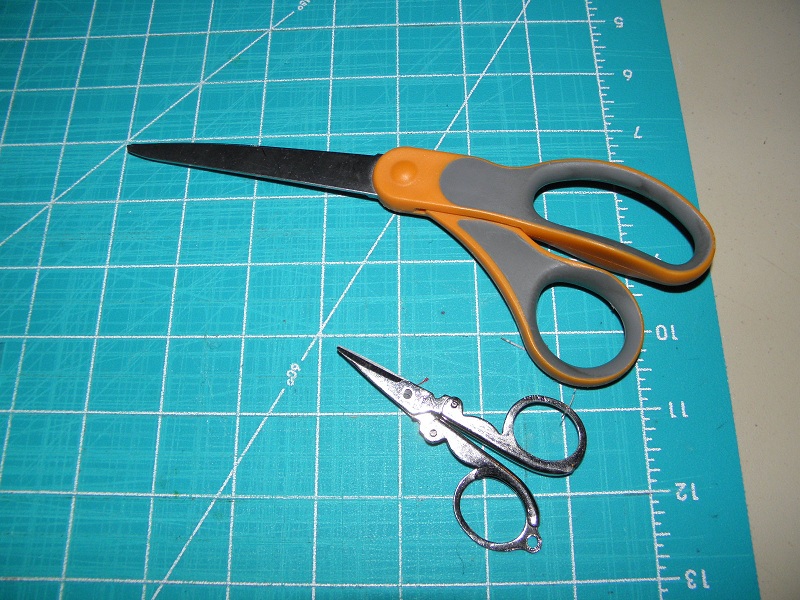
Just like with the sewing machine, you are going to need a good pair of scissors. Buy the best ones you can fit into your budget. Then when you get them home, show them to every member of the family, and tell them that if they touch them they will be shot. I mean it. The scissors you buy for your sewing room will not ever be used for anything else. Do not cut plastic, paper, cardboard, rubber bands, hair, groom your dog, or trim flowers with them. They are for one purpose only: To cut fabric. Once you use those scissors to cut anything else, they will not cut fabric smoothly.
When my children still lived at home, I put a colorful ribbon on the sewing scissors, and hung them on the wall in my sewing room when I was not using them. I had several other pairs of scissors in the house, stored in the kitchen, living room, laundry room, and bathroom. Anyone could use any of those other scissors for any reason. But, they knew better than to touch my sewing scissors.
Any brand of scissors will be fine, as long as they are made for cutting fabric. I like Fiskars, and that is the brand I have used for many years.
3. A Cutting Board

You can get several kinds of cutting boards. I have used the cardboard kind that fold up for storage, and this plastic kind. I like the plastic kind better. Using a cutting board will save your dining room from being scratched up by scissors and pins if that is the only place you have for cutting your fabric. They also have rulers printed on them with straight and bias lines, which helps you line up your fabric for cutting.
4. Hand Sewing Needles

Yes, even if you are sewing with a sewing machine, you will need the hand sewing needles for things like sewing on buttons, sewing hems and tacking facings. If you get them and keep them in your sewing kit, you won’t have to be running to the store for them at the last minute.
5. Extra Sewing Machine Needles
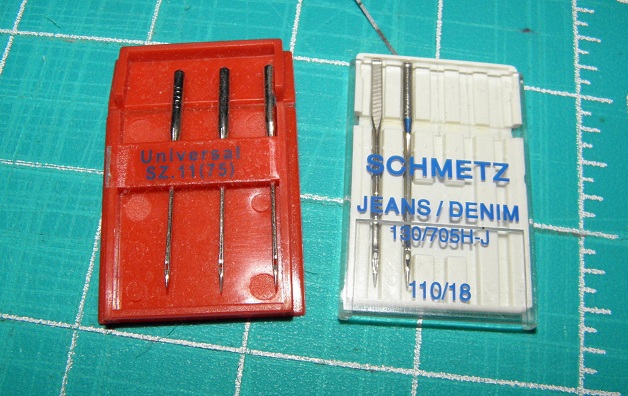
I can not tell you how many times when I first started sewing I ran out of needles for my machine. When you are learning, you do things like sew over pins, sew too fast, sew too many layers at a time, sew with improper tension, sew with the machine improperly threaded, etc. that will cause needles to break. If you have two or three packages of sewing machine needleson hand, you won’t get frustrated by running out of needles at a crucial point at two in the morning.
6. Fabric Marking Pens or Pencils

After cutting your fabric, you will need to mark dots, notches, and darts from the pattern onto the fabric. You will need some kind of marking pens that washes out with water for making the marks. This helps you match up seams and helps make your garments or crafts come out perfect.
7. Measuring Tape

I have several measuring tapes, and use them all the time when I am sewing. Whether I am making a quilt, a tote bag, a flower girl dress, or an apron, measuring twice before cutting, and then again before sewing, helps me keep the seams straight and even. Get at least one for your sewing kit. I also like to keep one in my purse.
8. Thread

If you are just starting out building your sewing kit, I would suggest getting two or three spools each of white, black, gray, and beige threads. Don’t buy the cheap stuff in the $1 bin. You will be sorry if you do. That stuff may be inexpensive, but it will break if you sew too fast, or if the tension on your machine is not just right. It will also pill up, and make little balls of lint next to your needle, so that sometimes it will even break your sewing machine needle.
There are many different manufacturers of thread, but most of the thread in my thread bin is Coats & Clark. I use either 37% cotton/67% polyester, or 100% polyester thread. It is smooth and doesn’t break as easily as 100% cotton. If in doubt about what to buy, ask the clerk in a fabric store what is the best thread to use for the project or type of fabric you are buying. You don’t want to mess up a fabulous project with the wrong thread.
9. A Magnetic Pin Dish and Pins Pins Pins

I like to use the pins that have the little plastic beads on the top. This makes them easier to find with your eyes when you drop them on the floor so that you don’t find them with your feet. Get lots of pins. More than you think you will ever use. Because you will use them. When I am showing someone new to sewing how to get started, I always tell them to PIN PIN PIN! The more pins you use when matching up seams and notches, the better, or straighter your seam will be. So, do yourself a favor and use those pins.
Also, go to Amazon and get a Magnetic Bowl – Tool / Nut / Bolt Holder. I have used mine since we started traveling in the RV in 2000. It holds pins magnetically so they don’t spill out everywhere. My pin bowl has traveled thousands of miles and never lost a pin. I have even used it in the cab of the truck to do hand sewing when we were traveling. Once you put those pins in that dish, they are NOT coming out until you pick them up. You are welcome.
10. Seam Ripper

The seam ripper will become your best friend if you take up sewing for a hobby. I have used mine more than I ever wanted to, more than I ever want to admit. The seam ripper comes in very very handy whenever you have made a mistake, and sewn the pants legs together at the bottom. Yes, I have done that on occasion. My seam ripper was also quite handy when I was making my niece’s flower girl dress. I thought I would never get that one thing sewn right. Besides taking out incorrectly sewn seams, a seam ripper will take off buttons you want to save, rip out zippers, and cut button holes open. Get one or two.
11. Extra Bobbins

Do yourself a great big favor, and buy a package or two of extra bobbins
for your machine. Then make a habbit to wind two bobbins of thread before you start your project. The first thing I do when I sit down to sew is to make sure I have two (or more if it is a big project) bobbins of matching thread. It is sooooo frustrating to run out of bobbin thread when you are in the middle of a seam. If you haven’t wound that second bobbin, you have to take the project out of the machine, unthread the machine, rewind the bobbin, rethread the machine, then start over where you ran out of bobbin thread. Save yourself the headache with just the minute it takes to wind the second bobbin. No one ever told me that when I started sewing.
12. Iron and Ironing Board

Even if you never iron another thing in your house, if you are going to sew, you will need an iron and an ironing board. From start to finish, you will be using these to press the fabric, press seams open, press hems, and on and on. I like a steam iron, as it helps set seams and creases in fabric. I also like a heavier iron as it doesn’t take as much effort when the iron has some weight to it. My ironing board is a small one that sits on top of my desk when I am using it. You can also lay a towel on a flat surface if you don’t have an ironing board. Don’t skip the pressing, get an iron.
I hope this list of basic sewing tools and equipment helps you some. Do you have any other sewing questions for me?