
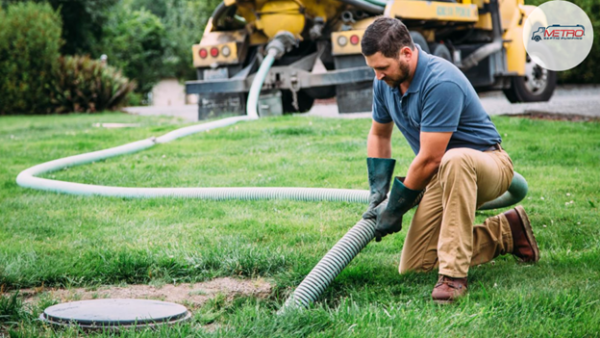
If you’ve got a septic system, you probably know that the tank needs to be emptied regularly to maintain optimal function. The goal of septic tank pumping is to remove the sludge at the bottom of the tank and the floating solids before they build up and block the outlet pipe. This process prevents costly repairs, keeps the system in tip-top shape, and saves you money in the long run. It restores the tank’s capacity and reduces the risk of septic failure. It’s important that septic pumping is performed by a reputable septic service company.
Metro Septic Pumping is the septic company to call when you’re in need of professional septic pumping in Fayetteville. Today, we’ll explore why septic pumping is the solution to avoiding costly repairs.
How Septic Tank Pumping Prevents Costly Repairs
- Prevents Clogs and Backups: When solids and sludge build up in your septic tank, they can create clogs that prevent wastewater from flowing properly. This can lead to backups into your home or yard, causing damage and unpleasant odors. Regular pumping removes these solids, preventing clogs and backups.
- Protects the Drain Field: The drain field is a vital component of your septic system. It helps disperse treated wastewater into the soil. If the tank is not pumped regularly, solids can accumulate and clog the drain field, preventing it from functioning properly. This can cause wastewater to back up and damage your property.
- Reduces the Risk of System Failure: A clogged or damaged septic system can lead to complete failure. This can be a costly and disruptive event, requiring extensive repairs or even replacement. Regular pumping helps prevent system failure by maintaining its proper function.
- Saves Money in the Long Run: While septic pumping in Fayetteville may seem like an added expense, it is a preventive investment that can save you money in the long run. By preventing costly repairs and system failures, you can avoid significant financial burdens.
How Often Should Your Septic Tank Be Pumped?
A standard household septic tank needs to be pumped every three to five years. However, your septic pumping schedule depends on the size of the tank, the volume of solid waste, and household size. As you would expect, larger tanks can hold more solids before needing to be pumped. In addition, more people in a household generate more wastewater, which can fill the tank faster. If you’re not sure how often you should have your septic tank emptied, it’s best to consult a company specializing in septic pumping in Fayetteville.
What to Do After Septic Tank is Pumped
There are crucial things you need to do after emptying your septic tank to get it off to a great start. First, be mindful of what you flush down the toilet or what you put down your kitchen sink drain. Avoid flushing or pouring things like grease, oil, coffee grounds, or toilet paper that can clog the pipes or increase the bacteria in the septic tank. For a short period, consider limiting your water usage to essential tasks. This can help the system recover and prevent overloading. It’s also advisable to schedule regular maintenance to prevent future problems.
Need Septic Pumping Service? Call Metro Septic Pumping
Septic pumping is a job that should be handled by professionals. The team at Metro Septic Pumping has the training, experience, and advanced equipment to pump out septic tanks of all sizes.


Leave a Reply