
Most businesses within the food industry involve running a commercial kitchen of some kind. Whether you run a small catering business from home or a restaurant with a large kitchen packed with staff, if you sell food that you produce, it becomes a commercial kitchen. Even if you’re an experienced home cook, you will find that running a commercial kitchen has different challenges and expectations that might come as a surprise. However, there are some 5 things to remember when running a commercial kitchen. These are either necessary for running your kitchen, or will simply make your life a whole lot easier.
1. The Legal Side

Before you can even get your business started, you likely need to have your commercial kitchen inspected and licensed. This involves contacting your local health department and arranging for an inspector to determine whether your facilities meet local commercial standards. Depending on the specifics of your business, you may have to contact different health inspection agencies. For example, a retail food company will be licensed and inspected by a different department than a wholesale operation.
If you are designing a kitchen, then it’s better to involve the inspector during the design phase and to have them look over your plans. It’s far easier to change a design before the kitchen is built than after your brand new commercial kitchen has been built.
If you’re using a pre-built commercial kitchen or your own home kitchen, you will still need to have it inspected before you can start work. It is possible to get your home kitchen licensed, depending on the local cottage kitchen laws. This means that small operations are still viable, as long as your kitchen is up to scratch.
You will then have to pay fees and renew your license annually. This will involve regular inspections.
2. Health and Safety

Speaking of inspections, it’s up to you to make sure that your kitchen meets health and safety standards. Any glaring issues will have been pointed out in the initial inspection, but you will have to maintain your kitchen. If you fail an inspection, you will lose your license, meaning that you’re unable to run your business. Even worse, you could potentially make people dangerously unwell.
You will need to learn and employ safe and sanitary kitchen practices, such as cleaning your workstation as you go and eliminating cross-contamination.
One of the best ways to keep your commercial kitchen in good condition is to hire an external kitchen cleaning and maintenance company. They offer services such as exhaust system cleaning, which makes your kitchen both clean and safe.
3. Kitchen Equipment

A kitchen is more than just counters and food. Rather, every kitchen is only as effective as its equipment. This is even more true of a commercial kitchen. Generally, most commercial kitchens use similar equipment to domestic kitchens.
Stoves, ovens, refrigerators, freezers, and dishwashers are all a common staple of commercial kitchens. However, they tend to be much larger in scale and may be designed to deal with more extreme conditions. For example, walk-in refrigerators and freezers are common. If you’re running a small business, your home kitchen may be able to handle it, but as your business grows, bigger and better equipment becomes necessary.
Some commercial kitchens also have more specialized equipment that you won’t find in most ordinary kitchens. Also, because of the aforementioned health and safety concerns, much of this equipment will be designed to keep things as sanitary as possible.
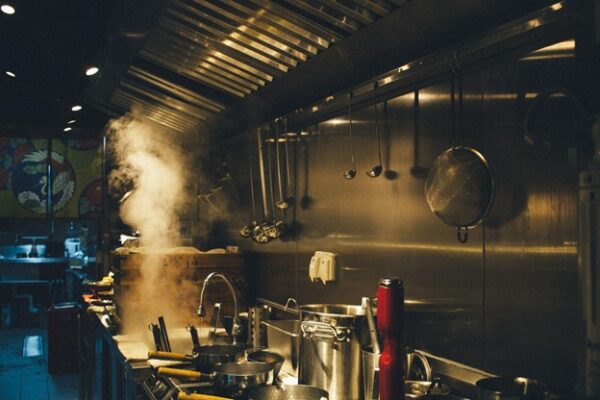
Most commercial equipment is made from stainless steel because it is easily cleaned and sanitized. This equipment must be sanitized either by hand or with suitable dishwashing equipment. Even if you have a home kitchen, you must have the capability to do this.
4. The Kitchen Layout
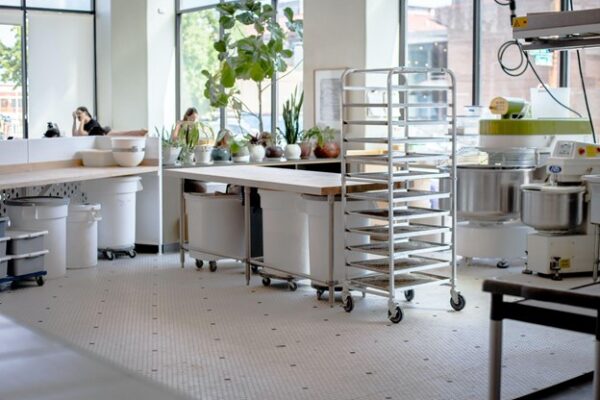
One often underestimated aspect of a successful commercial kitchen is the layout. In the design phase, the inspector will point out any layouts that affect food safety, but you also need to consider the workflow.
Ideally, the kitchen layout will be as efficient as possible, with plenty of counter space to make it easy to work. Even if you have a home kitchen, you can still think about a way to best use the facilities you have on hand. While efficiency is useful when you’re cooking for family, it becomes far more important when you’re trying to save time while cooking. After all, when you work for yourself, time is money.
Efficiency doesn’t mean that everything should be too close together. Leave space between work areas, and space for people to move around comfortably and safely. While planning out a kitchen like this might seem complicated, it will potentially save a lot of time.
If you have multiple people working in the kitchen, it may become more difficult to adjust. So, this is something else to bear in mind during the design phase. Otherwise, you may need to change the whole design of your kitchen later down the line, complicating things far more than necessary.
5. Hiring Help

Hiring a good team is an integral part of running any company well, but the food industry typically requires particularly close-knit staff. A commercial kitchen, especially once it has grown to the point where it needs to accommodate several people, needs to run smoothly.
Different industries have different needs, but it stands to reason that, if you want an efficient process, your employees need to know exactly what they’re doing. Make sure that they are trained and don’t neglect quality control, especially if they are unproven. If a part of the process is slowed up or handled poorly by one member of the team, it can slow everything down.
Once you have good staff that you can trust, make sure that you keep them. A hostile work environment can be incredibly damaging and may drive your best employees away. So, keep them happy and keep an eye on any potential problems or concerns. Communicate with your teammates often and treat them with respect and honesty.


Leave a Reply